
Scientists uncover critical insights into why airborne viruses lose their infectivity
Critical insights into why airborne viruses lose their infectivity have been uncovered by scientists at the University of Bristol.

Critical insights into why airborne viruses lose their infectivity have been uncovered by scientists at the University of Bristol.

Study removes AMR plasmids using a mobile, broad-host-range CRISPR-Cas9 delivery tool.

It is a scary fact that one in two women and one in three men in the United States will…

The 6th World Congress on Targeting Phage Therapy 2023 that was held on June 1-2 in Paris, and gathered more…

Platform selected to accelerate precision fermentation workflows, to support more sustainable and cost-effective manufacturing for active ingredients in vitamins and…
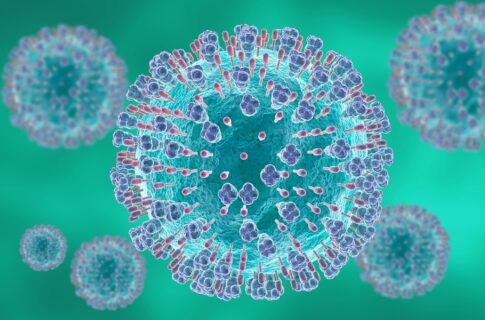
Research focuses on the design of a multi-epitope polyvalent vaccine against Human Respiratory Syncytial Virus (RSV), a leading cause of…

A new research paper was published on the cover of Aging (listed by MEDLINE/PubMed as "Aging (Albany NY)" and "Aging-US"…

In a new study, published today (15 June) in Nature Communications, a multi-centre team led by the Wellcome Sanger Institute,…

Researchers at the University of Birmingham have demonstrated that silver retains antimicrobial activity for longer when it is impregnated into…

Complete Genomics, Inc., a pioneering genomics company, today unveiled updated mission/vision statement to reflect renewed ambitions in taking on more…